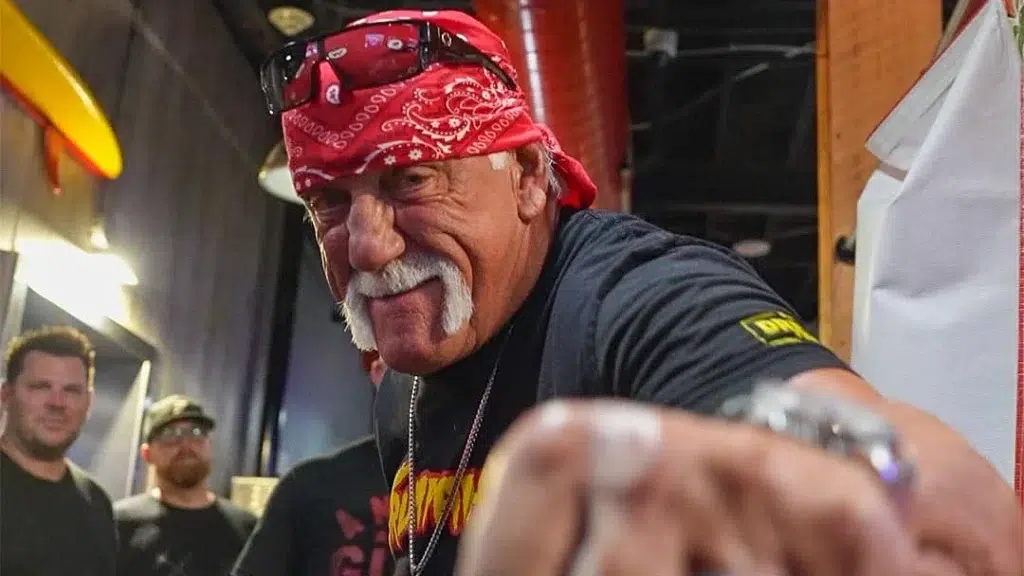
Hulk Hogan’s contributions to wrestling are unparalleled
A Tribute to Hulk Hogan: The Immortal Icon of Professional Wrestling

On July 24, 2025, the world lost a titan of sports entertainment, Terry Gene Bollea, known to millions as Hulk Hogan, who passed away at the age of 71 due to cardiac arrest at his home in Clearwater, Florida. This tribute honors the man who transformed professional wrestling into a global phenomenon, reflecting on his unparalleled legacy while acknowledging the news of his passing, as confirmed by multiple reputable sources. Below, we celebrate Hogan’s extraordinary life, his impact on wrestling and pop culture, and address the facts surrounding his death, ensuring accuracy through careful fact-checking.
The Birth of a Legend

Born on August 11, 1953, in Augusta, Georgia, Terry Bollea grew up in Tampa, Florida, where his athletic prowess and towering physique—6’7” and over 300 pounds in his prime—set the stage for his future. Initially a musician and baseball player, Bollea’s path shifted when he caught the eye of wrestling promoters in the late 1970s. Trained by Hiro Matsuda, he debuted in 1977, wrestling under names like Terry “The Hulk” Boulder before adopting the iconic “Hulk Hogan” moniker in 1979, inspired by his resemblance to the comic book character and his larger-than-life presence.
Hogan’s early career saw him honing his craft in promotions like the American Wrestling Association (AWA) and Georgia Championship Wrestling. His big break came in 1983 when he joined Vince McMahon’s World Wrestling Federation (WWF, now WWE), where he would become the cornerstone of a wrestling revolution.
The Rise of Hulkamania

The 1980s marked the dawn of “Hulkamania,” a cultural phenomenon that propelled wrestling into the mainstream. With his bleach-blond hair, red and yellow gear, and signature catchphrase—“Train, say your prayers, eat your vitamins”—Hogan became the ultimate all-American hero. His charisma and in-ring storytelling captivated audiences, turning matches into epic battles of good versus evil. Hogan’s formula—absorbing punishment, “hulking up,” and finishing with his iconic leg drop—was simple yet electrifying.
His defining moment came at WrestleMania III in 1987, where he faced Andre the Giant before 93,173 fans at the Pontiac Silverdome. Slamming the 520-pound Andre remains one of wrestling’s most iconic feats, cementing Hogan’s status as the sport’s biggest star. He headlined eight of the first nine WrestleManias, winning the WWF Championship six times, including a 1,474-day reign, one of the longest in history.
A Cultural Icon

Hogan’s influence transcended wrestling. He became a pop culture juggernaut, appearing in films like Rocky III (1982) as Thunderlips, No Holds Barred (1989), and family-friendly movies such as Suburban Commando (1991) and Mr. Nanny (1993). He starred in the TV series Thunder in Paradise (1994) and hosted Hogan Knows Best, a reality show that offered a glimpse into his family life. His animated series, Hulk Hogan’s Rock ‘n’ Wrestling, and countless merchandise items made him a household name.
Hogan’s message of perseverance resonated with fans, particularly children, who saw him as a real-life superhero. His work with the Make-A-Wish Foundation, including being named the 2008 King of the Krewe of Bacchus in New Orleans for fulfilling wishes of terminally ill children, highlighted his commitment to giving back.
Reinvention: Hollywood Hogan and the nWo
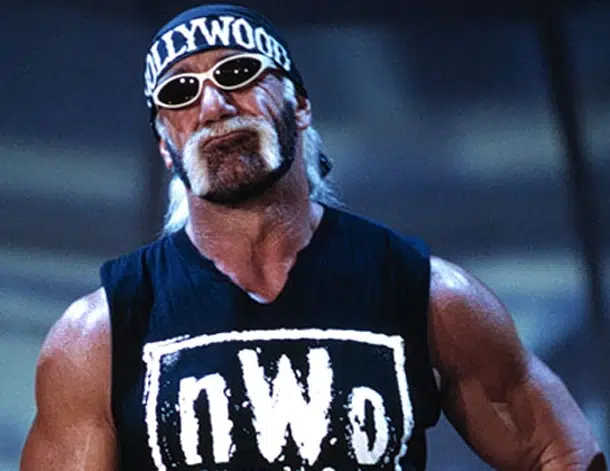
In 1994, Hogan joined World Championship Wrestling (WCW), where he initially continued as the heroic Hulkster. But in 1996, he shocked the world by turning heel at Bash at the Beach, forming the New World Order (nWo) with Scott Hall and Kevin Nash. As “Hollywood” Hogan, clad in black and white, he embraced a villainous persona that revitalized his career and sparked the Monday Night Wars, helping WCW surpass WWF in ratings for 83 weeks. This reinvention showcased Hogan’s versatility and kept him relevant in a changing industry.
Trials and Triumphs

Hogan’s career was not without controversy. In 1994, he testified in the United States v. McMahon case, admitting to steroid use but defending Vince McMahon, a move some saw as a betrayal. In 2015, a leaked sex tape revealed Hogan using racist language, leading to his temporary removal from the WWE Hall of Fame. He was reinstated in 2018 and inducted again in 2020 as part of the nWo. Despite these setbacks, Hogan’s 2002 return to WWE, culminating in an iconic match against The Rock at WrestleMania X8, reaffirmed his enduring appeal.
Health challenges also marked his later years. Hogan underwent over 25 surgeries, including 10 back operations, knee and hip replacements, and a neck procedure in May 2025. Rumors of his declining health surfaced in June 2025, but his wife, Sky Daily, and representatives denied claims of a coma or heart issues, stating his heart was “strong” post-surgery.
The Reality of His Passing

On July 24, 2025, Hulk Hogan passed away at his Clearwater, Florida, home due to cardiac arrest, as confirmed by multiple reputable sources including TMZ, WWE, and the Clearwater Police Department. Emergency responders were called at 9:51 a.m. after a cardiac arrest report. Despite efforts by paramedics, Hogan was pronounced dead at Morton Plant Hospital at 11:17 a.m. Clearwater Police Major Nate Burnside stated there were “no signs of foul play or suspicious activity,” and an investigation is ongoing.
Hogan’s manager, Chris Volo, confirmed he died surrounded by loved ones. His wife, Sky Daily, had recently dispelled rumors of severe health issues, making his sudden death a shock to many. Tributes poured in from wrestling icons like Ric Flair, Triple H, and Charlotte Flair, as well as public figures like Donald Trump, JD Vance, and Sylvester Stallone, reflecting Hogan’s widespread impact.
Hogan’s Final Chapter

In his final months, Hogan remained active, appearing at WWE Raw’s Netflix debut on January 6, 2025, to promote his Real American Beer brand. He co-founded Real American Freestyle, a wrestling promotion focused on traditional freestyle wrestling, serving as its commissioner. His appearance at the 2024 Republican National Convention, where he endorsed Donald Trump, underscored his continued cultural relevance.
An Immortal Legacy
Hulk Hogan’s contributions to wrestling are unparalleled. He turned WWF into a global powerhouse, headlining the first WrestleMania in 1985 and driving its expansion. His rivalries with Andre the Giant, Randy Savage, and The Rock are etched in wrestling lore. Wrestling historian Dave Meltzer noted, “You can’t possibly overrate his significance in the history of the business.”
Beyond the ring, Hogan inspired millions with his message of resilience. His “Hulkamania” mantra—embodying hard work, faith, and perseverance—resonated with fans worldwide. As tributes flood social media, with X users calling him the “GOAT” and sharing iconic moments, his impact endures.